Book
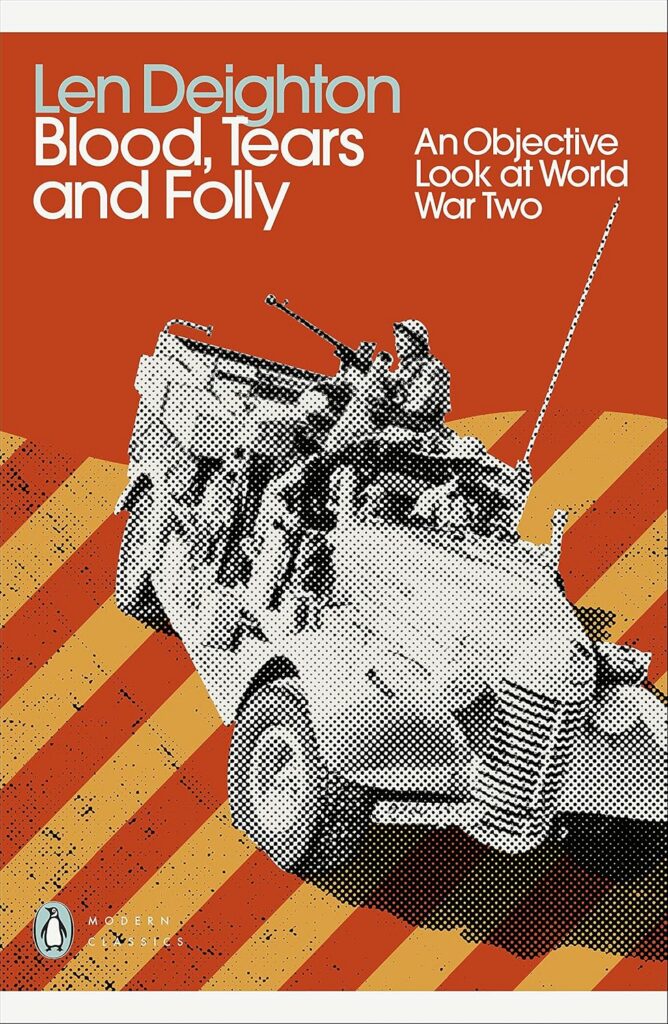
Blood, Tears and Folly
Deighton surveys the Second World War as a global conflict shaped by decisions made long before particular battles began. He examines political assumptions, industrial capacity, weapons development, logistics and command across Europe, North Africa, the Soviet Union, Asia and the Pacific, asking why governments repeatedly entered campaigns for which they were poorly prepared.
Rather than treating Allied victory as inevitable, the book emphasises uncertainty and the cumulative effects of error. Major leaders and operations are placed alongside the practical limits of aircraft, ships, armour and supply, producing a broad history of how strategy was constrained by technology, geography and institutional habit.
More by the author
Other books by Len Deighton